
Achieving Passive House: Airtight Guide

Leaky staple, as you depressurise, they rip the membrane.
Passive House construction requires both the external and internal membranes to be airtight. However, final blower door testing for certification is typically performed only on the internal layer.
If you’re pursuing Passive House certification, this article assumes you’re familiar with vapour-permeable membranes. To find out more, see our article on that very topic. There are many brands available—any product with Passive House certification will generally perform well.
Common Airtightness Pitfalls
Staples – Staples can cause problems with overall air leakiness. Tens of thousands of small holes can collectively become one large leak. Avoid using staples directly on the membrane. Instead, you could use thin pieces of packer or use double sided butyl tape on the studs and then brace using non-structural battens. Check out our Tighthouse website to purchase this tape.
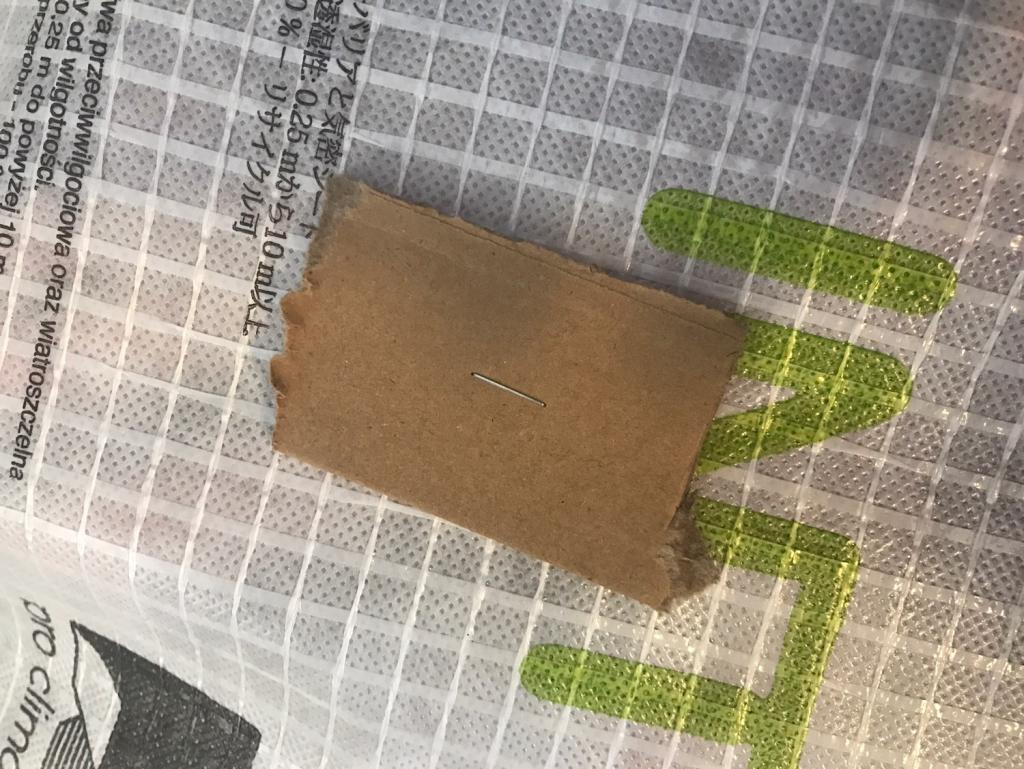
In order to stop the membrane from ripping you can also use thin pieces of packers.

Pin prick of a hole
Airtightness Fixes and Tips
- Expanda foam is not the best product to use for air tightness. If you want to use it, wait for it to dry, cut it back, and coat it with acrylic caulk.
- Use a glue for sticking the membrane down onto the floor, whether it be wood or insulated concrete. Sometimes it’s hard to ensure that the tape has stuck down sufficiently, especially when it’s quite dusty.
- Make sure you put pressure on the tape to remove moisture and ensure adhesion.
- For irregular surfaces like brick or rough timber, use butyl tape paired with acrylic caulk to bridge gaps.
- Where there might be existing brickwork, the brick mortar needs to be sealed with a paint
- Caulk both ends of conduits once your cables have been brought through, regardless of direction.
- You can’t just use any type of tape, depending on the surfaces you are sticking to. Always refer to manufacturers recommendations.

Make sure the tape has been pressed down and dewatered. Use butyl tape on wood.

Expandafoam is not air tight, especially once you cut it back.

Make sure tape is consistent around windows

Too many staples. Not a good idea.

Expandafoam is not the best product to use.

Caulk inside conduits on both ends once you have brought your cables through.

Double studs leak, and they leak all the way down, caulk in between them.

Passive House Blower Door Setup

Membrane is NOT sufficiently battened off here and could rip down.
Pressure Testing and Troubleshooting Considerations
- Make sure all ceilings and walls are battened off membrane for testing. Otherwise, the membrane may tear off the baton when depressurised.
- Use the back of your hand with the building in a state of depressurisation – its surprisingly effective.
- For hard to reach places, smoke can be employed as well.
- Key holes should not be taped for the final test.
- Volume calculations for the blower door test must be done from plaster to plaster. Do not include door cavities or ceiling voids.

Battened off membrane on the ceiling
If you’re aiming for 0.6 ACH @ 50Pa, consult us for airtightness testing and advice. The timing of your test is critical—before plasterboard goes up is ideal.
We’re Australia’s most experienced team for achieving Passive House airtightness. Get in touch for a turnkey solution and expert guidance that can save you time and money. Contact us online or give us a call.


