
Indoor Swimming Pool Ventilation
Evaporation from indoor swimming pools is inevitable and costly. It affects not just energy efficiency but also building durability, air quality, and occupant comfort.
The Hidden Cost of Pool Evaporation
Indoor pools continuously produce large volumes of moisture-laden air, often containing chlorine or salt, as water evaporates from the pool surface. This humid air can rot a building from the inside out and negatively impact indoor air quality.
When humidity is high and the building envelope has cold surfaces or uncontrolled air leaks, several problems can arise:
- Rusting of metal components

- Paint blistering
- Structural deterioration
- Growth of mould, mildew, bacteria, and fungi

These microbial growths emit volatile organic compounds (VOCs), many of which are toxic and odorous. This not only creates an unpleasant environment for patrons and staff but can also pose serious health risks.
Why High Humidity Persists
Evaporation problems are made worse by poor construction practices, such as inadequate insulation and leaky building envelopes. High humidity in combination with poorly insulated surfaces can lead to significant damage over time. Many assume the solution is to increase ventilation. However, the opposite approach, controlling airflow and improving airtightness, is far more effective.
There are 2 ways to deal with swimming pool high humidity.
- Remove the moisture from the air
- Prevent moisture from entering the air in the first place
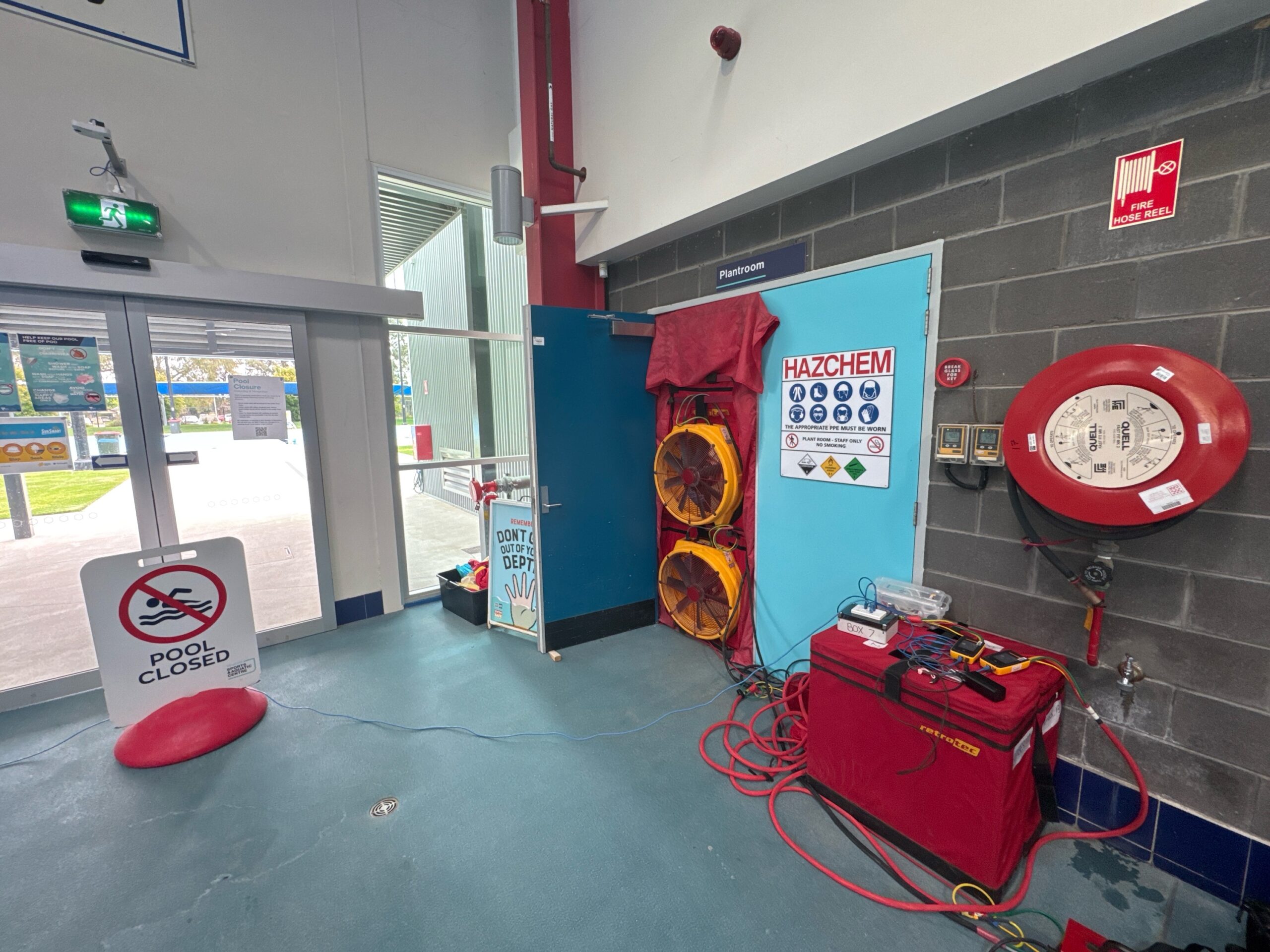 Using an Energy Recovery Ventilator (ERV) can help reduce humidity and increase comfort by bringing in fresh air. However, ERVs alone may worsen evaporation by increasing air movement over the pool surface, inadvertently increasing humidity.
A more efficient solution involves maintaining positive pressure within a well-sealed building. This creates a layer of still air above the water, which acts like a mechanical form of insulation and drastically reduces evaporation. Thereby minimising the need for dehumidification altogether.
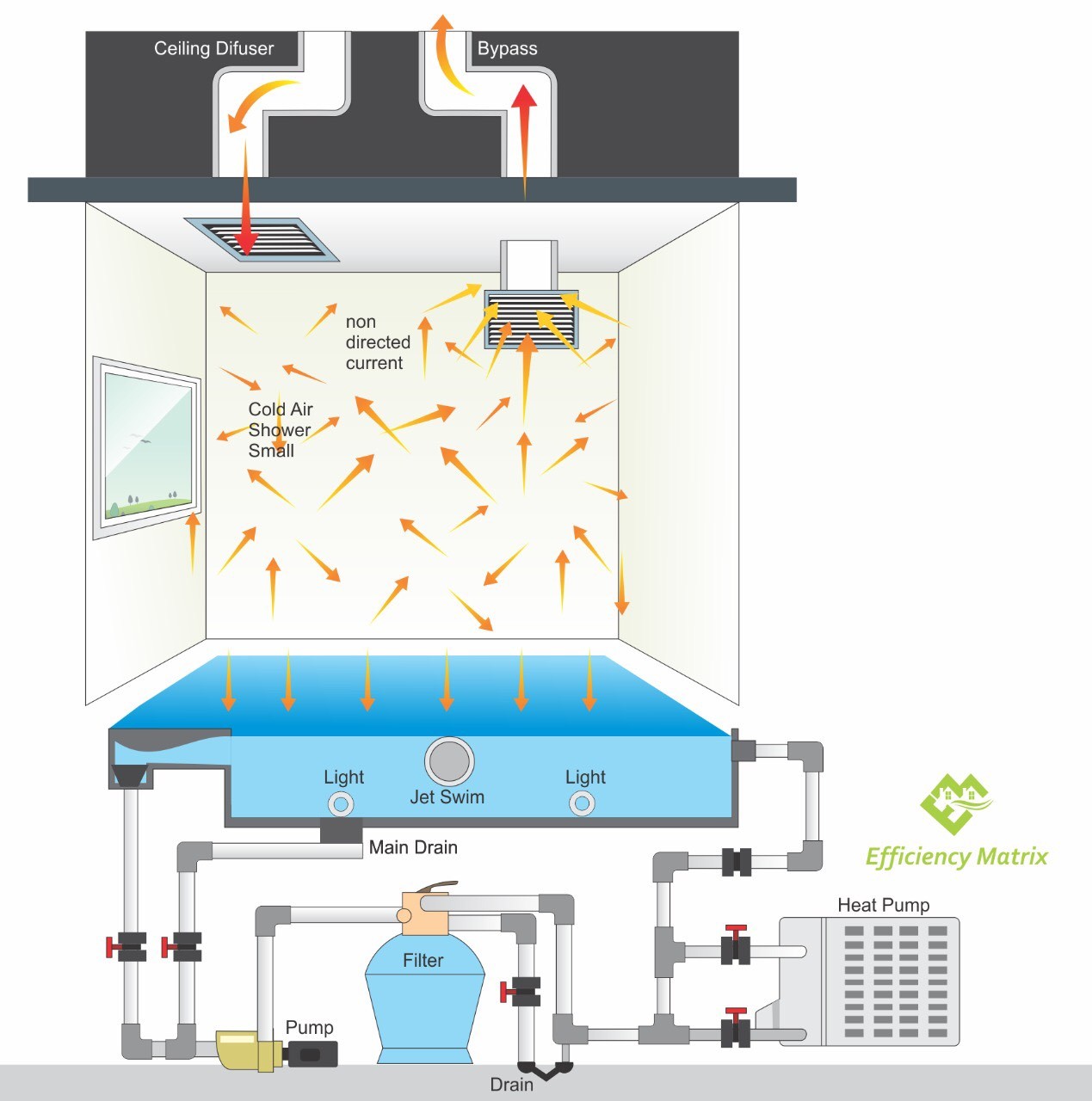
The Ideal Setup: Airtightness + Positive Pressure + ERV
1. 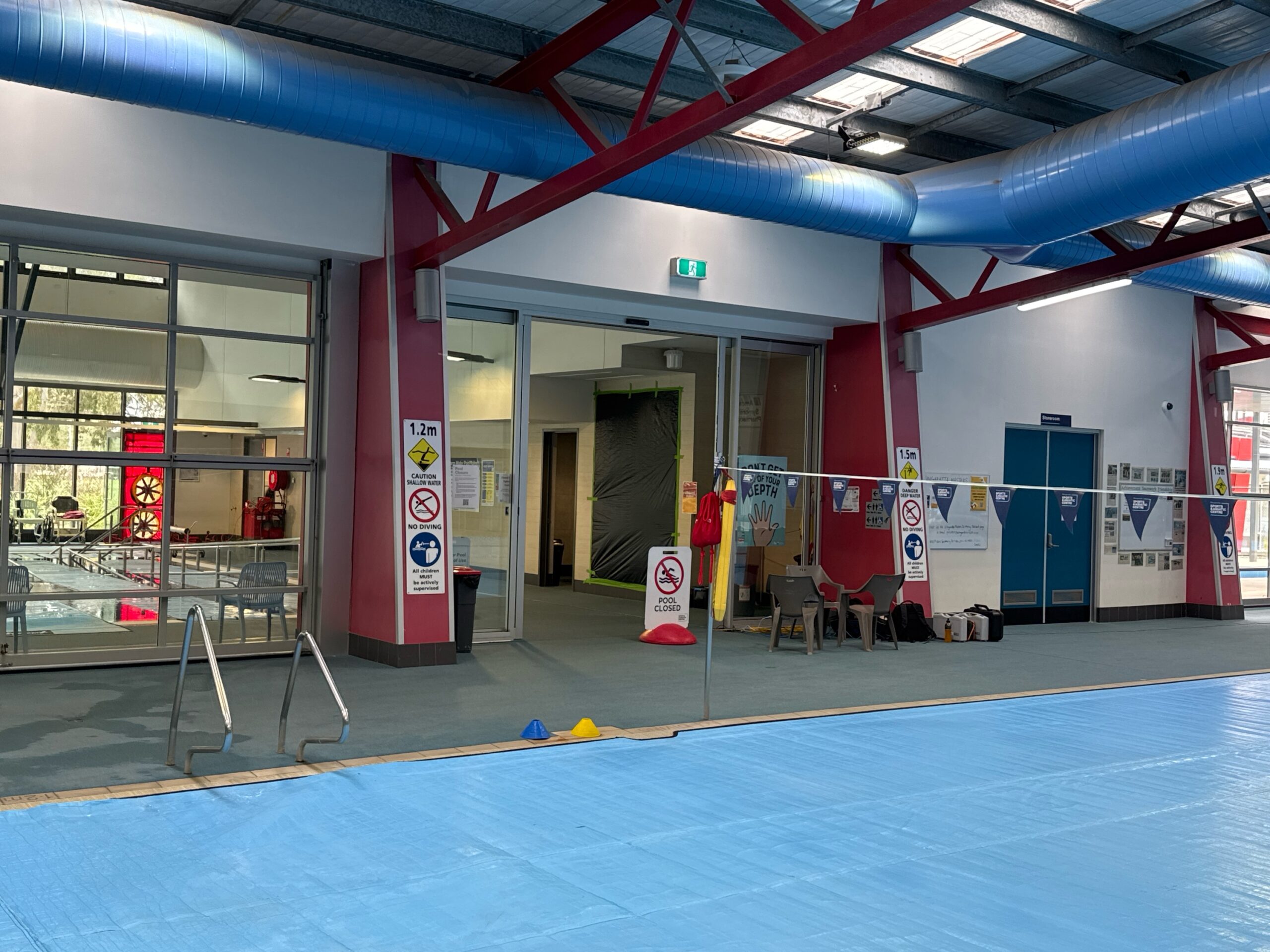 Constructing an energy-efficient building:
- Highly insulated ceilings, walls and floors with no cold spots, especially at parapets
- Avoid single glazing, particularly between wet and dry zones. Use only double-glazed units with thermally broken frames.
- Design for airtightness (target: 2–3 m³/h/m² @ 50 Pa). This requires collaboration between designer and builder to resolve all junctions and penetrations.
- Integrate ERV/HRV systems with bathroom and shower exhausts.
2. Use durable wet area finishes:
Materials like cement sheet or blue board, with corrosion-resistant coatings. The airtight layer must be vapour impermeable, with continuous insulation aligned with it.
3. Maintain continuous insulation:
This applies not just to exterior walls but also to walls separating wet and dry zones.
4. Keep doors closed:
Doors to the outside or to dry areas should never be propped open. Doing so compromises the pressure balance and allows humid air to circulate improperly, increasing evaporation.
5. Balance water and air temperatures:
Maintain pool water at around 26°C and air temperature at 24°C for optimal comfort and humidity control.
6. Ventilate smartly with ERV + filtration:
- Low energy use
- Removes humid, corrosive air
- Recovers up to 80% of exhaust heat to pre-warm incoming fresh air
- Returns condensate to the pool
7. Use a pool blanket when the pool is not in use:
This can reduce evaporation by up to 30%.
8. Choose surface-mounted lighting:
Avoid penetrations that break the airtight and thermal insulation layer. Lights should be installed without compromising the envelope.
9. Monitor key conditions:
Track indoor and outdoor air temperatures, humidity, and water temperature.
10. Conduct regular airtightness testing:
Periodic blower door tests will help ensure your aquatic facility maintains its performance over time.
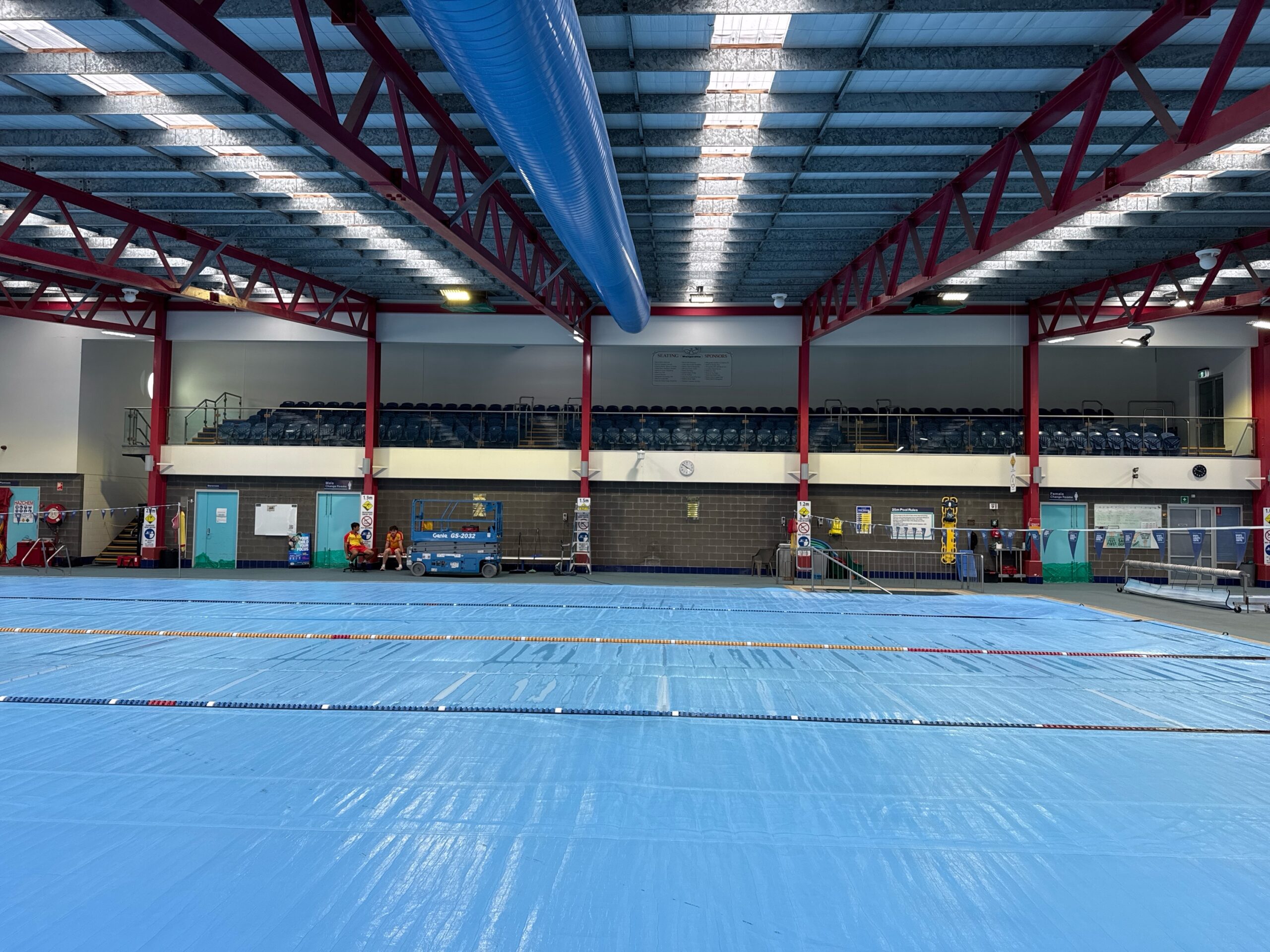
Retrofitting for Better Performance
If your existing facility struggles with humidity or high energy costs, retrofitting the building envelope to improve airtightness—combined with pressurisation and heat recovery—can deliver major benefits.
We offer:
- Whole-building air tightness testing (blower door testing)
- Durable remediation strategies
- Detailed reports that identify problem areas for contractor follow-up


