
What is the Passivhaus Standard?
What is the European Passive House (Passivhaus) Standard?
The Passive House (Passivhaus) building standard originated in Germany in 1988 and is a voluntary standard which is overseen worldwide by the Passivhaus Institut in Germany (est 1996). Passive House certified buildings are the most energy efficient buildings worldwide.
A Passive House is defined as “a building in which a comfortable interior climate can be maintained without active heating and cooling systems” (Adamson 1987 and Feist 1988). The house heats and cools itself passively, hence the name.
While most commonly applied to new constructions, the Passive House standard can also be used for retrofitting existing buildings.
Key Requirements for Passive House Certification in Europe:
- Annual heating demand must be less than 15 kWh/(m²·a).
- Total primary energy use (including heating, hot water, and household electricity) must not exceed 120 kWh/(m²·a).
- Air leakage must be less than 0.6 air changes per hour, verified through a blower door test.
The key principles in Passive House design are:
- A compact building form with high-performance insulation.
- Optimal building orientation (often south-facing) and effective shading.
- Energy-efficient window glazing and frames.
- An airtight building envelope.
- Passive preheating of fresh air.
- High-efficiency heat recovery ventilation (HRV) using an air-to-air heat exchanger.
- Use of renewable energy sources for hot water.
- Energy-saving household appliances.
Comparison of Energy Ratings of Homes in Europe. 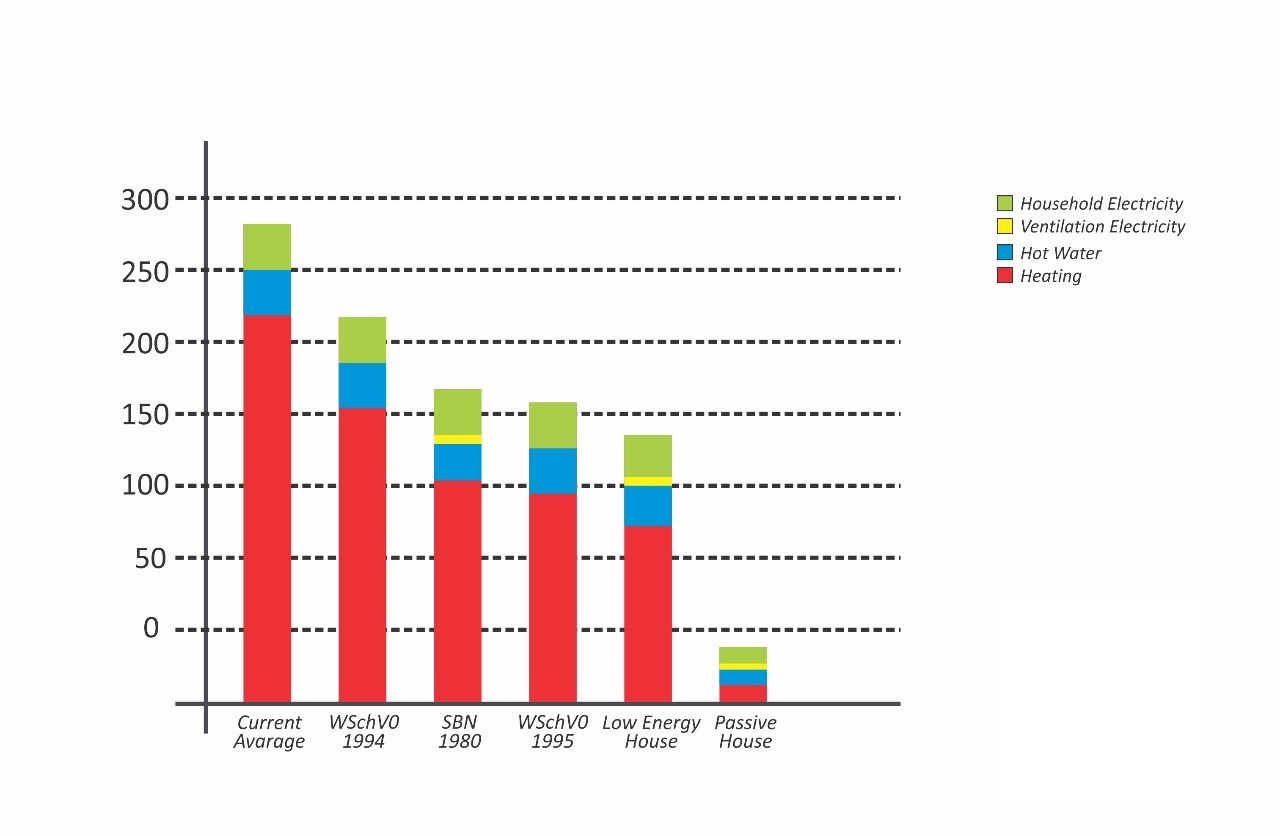 The Passivhaus Institut has developed “The Passive House Planning Package” (PHPP), a comprehensive toolkit for Passive House design, including:
- Calculating energy balances (including U-values).
- Window design and placement.
- Comfort ventilation planning.
- Heating load calculations.
- Estimating summer thermal comfort.
- Designing heating and hot water systems.
Passive Houses are built from a wide range of materials and use many different construction techniques, ensuring a “continuous uninterrupted airtight building envelope” is essential. The PHPP includes a construction manual with detailed techniques to achieve this.
Passivehaus certification of completed buildings worldwide is overseen by the Passivehaus Institut to ensure that buildings will perform to a specified standard. Currently there are over 30,000 such buildings mainly in Europe.
Links:
- Passivhaus Institute – Germany
- BRE Passivhaus UK
- BRE Passivhaus primer
- Passipedia, the Passive House resource
* Published by The Passivhaus Institut.
Can roof space ventilation effectively heat or cool a house?
Positive pressure ventilation systems are usually designed to extract air from within a building for a specific purpose e.g. to remove moisture from bathrooms, odours from toilets and both moisture and odours from cooking areas in kitchens.
Positive pressure ventilation systems are typically designed to extract stale or moist air from bathrooms, kitchens, and other service areas. Some systems, however, draw air from roof spaces and circulate it through the home. These were originally developed in the UK to address condensation and mould in older homes, by introducing drier air from the roof space.
Originally, such systems were not marketed as heating or cooling solutions. Recently, however, some manufacturers have begun making these claims. A study conducted by the University of Otago (New Zealand), titled “Heating and Cooling Potential of Roof Space Air: Implications for Ventilation Systems” – commissioned by the Energy Efficiency and Conservation Authority (EECA) – found these claims to be unsubstantiated.
The study concluded:
“Small potential heating and cooling benefits were possible at certain times from pumping air from the roof space into the living areas of some New Zealand houses. However, those potential benefits were not large enough to significantly alter the indoor air temperature on average.”
Moreover:
“Majority of the time, it was calculated that pumping air from the roof space into the house would provide no heating or cooling benefit. In fact, this would often actually act to push the internal temperature further away from the desired level rather than closer to it.”
The report recommended that “existing positive pressure mechanical ventilation systems should not be promoted and marketed on their heating and/or cooling potential.”
| Read the report: Heating and cooling potential of roof space air: Implications for ventilation systems | Pub. | May 2011. |
What is a low energy building? Is there a standard?
In a report from PU Europe, they define low energy buildings as “…typically using high levels of insulation, energy efficient windows, low levels of air infiltration and heat recovery ventilation to lower heating and cooling energy. They may also use passive solar building design techniques or active solar technologies. These homes may also use hot water heat recycling technologies to recover heat from showers and dishwashers.”
With the accelerating trend to low energy building throughout the world many terms are currently used to describe the desired end result. This can often create confusion as well as mislead as the there is no global standard and regulations vary from country to country.
A European survey undertaken in 2008 identified:
“…17 different terms in use to describe such buildings used across Europe, among which the terms
low energy house, high-performance house, passive house / Passivhaus, zero carbon house, zero energy house, energy savings house, energy positive house, 3-litre house etc”
This diversity in language demonstrates some confusion that can arise from the use of these terms interchangeably. Passive House aims to minimize energy demand through efficient design and construction. Net Zero Energy homes often rely on significant onsite renewable energy to offset higher energy needs. Both approaches have a similar desired outcome, but the end result in terms of building performance metrics and occupant comfort can vary greatly.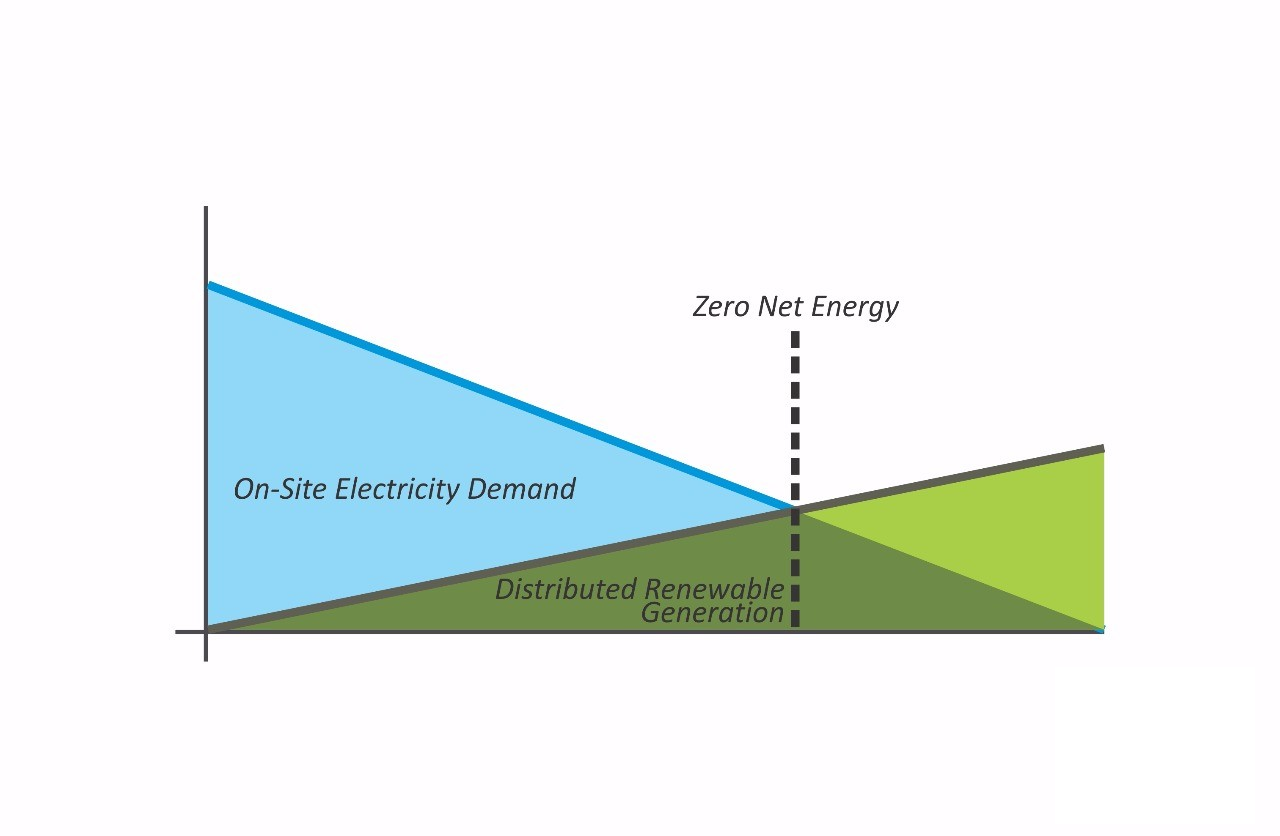
pub. California Energy Efficiency Strategic Plan Jan. 2011 update
A 2011 review by the European Council for an Energy-Efficient Economy highlighted the lack of a common definition for “zero energy” buildings, despite their growing popularity. Additionally, a paper delivered at the Renewable Energy Research Conference 2010 in Trondheim, Norway emphasised that more education is required to enable people to better understand the concepts and technologies utilised in low energy building. It also called for long-term studies to be undertaken to confirm they are performing as designed. Education, standardisation, and clear terminology are seen as essential to the global success of low-energy buildings.
The Passive House / Passivhaus standard remains one of the few internationally recognised, measurable standards in the field, supported by long-term studies and verified building performance.
Check out another exciting example of a Passive House in Australia below:


