
Air Permeability and Seeing the Unseen

Achieving an Air Permeability Rate Requires Seeing the Unseen
Energy efficiency hinges on controlling heat and air flows, which begins with containing air. Designing an energy-efficient building involves specifying an air barrier in plans, selecting appropriate sealing products, and ensuring correct installation during construction. Ultimately, a blower door test validates the effectiveness of these efforts. However, since air is invisible, untrained eyes don’t know what to look for.
The Blower Door Test: A Crucial Tool
A blower door test is an essential tool for energy-efficient builders. It uses fans to induce a pressure on the building envelope and pressure gauges to measure how well the building can hold that pressure. Since it can be done on almost any building, it provides to compare the airtightness of one building to another. Many areas in the U.S. and Europe require them in their building codes. In this country, the Green Building Council of Australia’s Green Star rating system offers an Innovation Challenge point for doing the test and another for achieving best practice air permeability.
Despite its usefulness, blower door testing is underutilized in Australia, particularly in Sydney, where a scarcity of experienced practitioners risks tests being awarded solely based on lowest cost. Critically, blower door testing itself does not save energy. Just like other diagnostic tools, it merely is a way to check envelope performance at a particular stage of construction. Many builders, either unfamiliar with the test or overly confident that they know what they’re doing, go about their regular business and call for the test at the end. But if testing at the end is all you do, the builder is largely aiming for a target he cannot see.
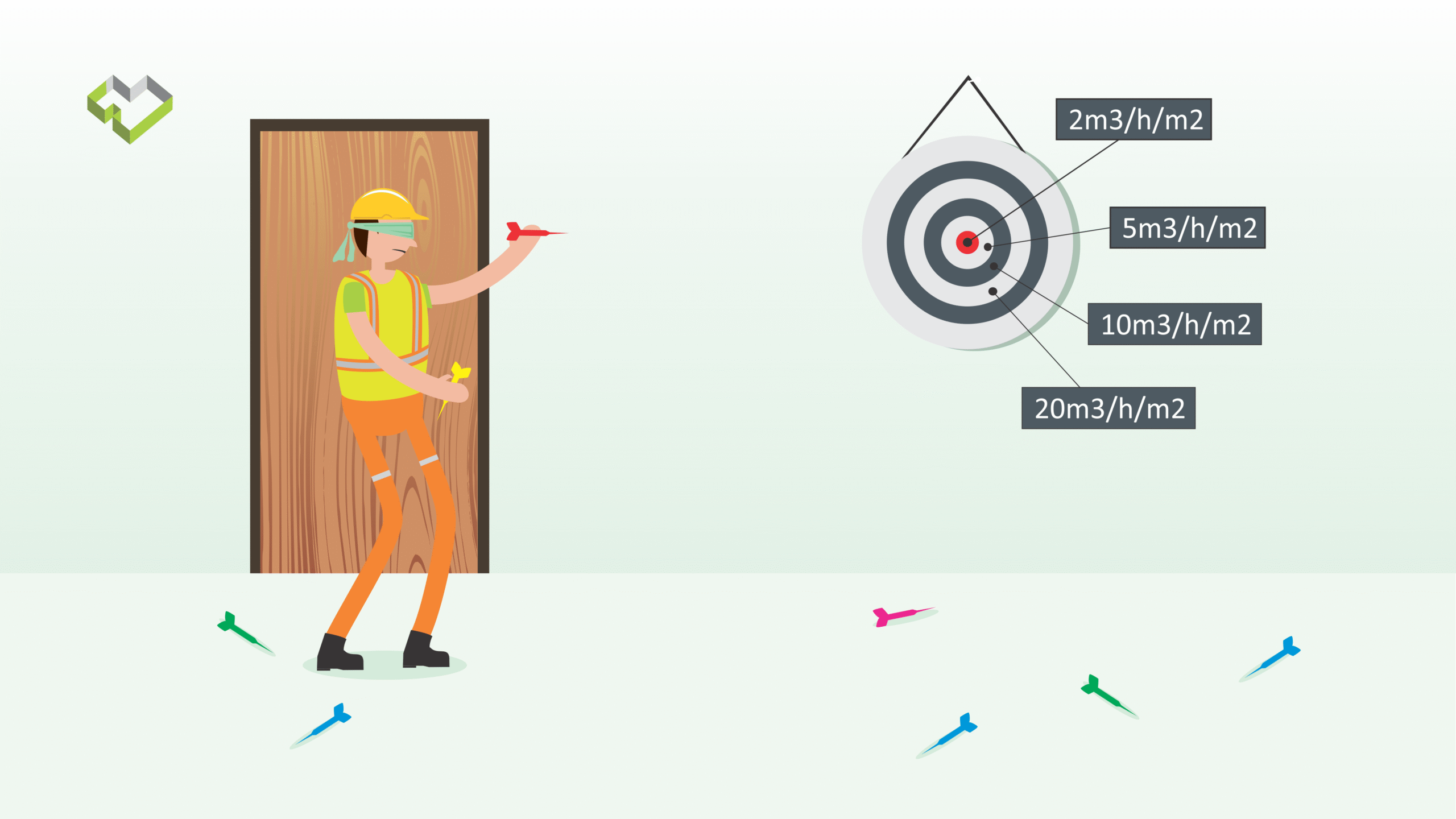
Within seconds of turning on the blower door fans, an experienced tester can tell how well the builder has been made airtight. If they have done an excellent job, everyone breathes a sigh of relief and pats each other on the back. If they fail, the next step can lead to finger-pointing. The owner blames the architect, who blames the contractor, who blames the worker, who turns around and blames the project team because he wasn’t given adequate instruction. In truth, all are responsible. Fixing the problems at the end of construction can be especially expensive because solutions often lie beneath the surface. This is not a situation that anyone wants.
 The real usefulness of a blower door lies in its ability to help you see the unseen, to call attention to things you may have missed. But before construction even begins, an experienced building science firm can see weak points in your plans and details before they become a reality and offer constructive advice on how to cost-effectively fix them. On-site during construction, their eyes can spot mistakes before they are repeated. A smaller-scale preliminary test early in construction can help you identify problems when it is so much cheaper to fix them. Variations on the test can help you uncover the causes and determine solutions so that these can be replicated on the rest of the project for maximum effect. In the case of a failure, an experienced firm knows how to fix the problems and who to call.
The best building science firms help you pass an air permeability test before they even turn the blower doors on. For these reasons, it matters quite a lot who you choose to test your building. In short, experience counts. In the hands of an experienced building science firm, the power of a blower door test is not the number you get, but the ability to help you see the unseen.
Efficiency Matrix is the only experienced, fully equipped infiltration testing firm with a permanent presence in Sydney. They possess the most combined blower door testing experience of anyone in Australia. John Konstantakopoulos’s company has the largest set of calibrated, professional-grade fans, infrared cameras, and diagnostic equipment in Australia, and he has done more large-building infiltration tests in Australia than anyone in the country. His relationship with builders over the years has earned him repeat business from multiple large and medium construction companies.


